Ultimate Guide to Building a Launch-Ready Audience
Define one buyer, test demand with waitlists or pre-orders, move followers into email, and use proof to boost launch sales.
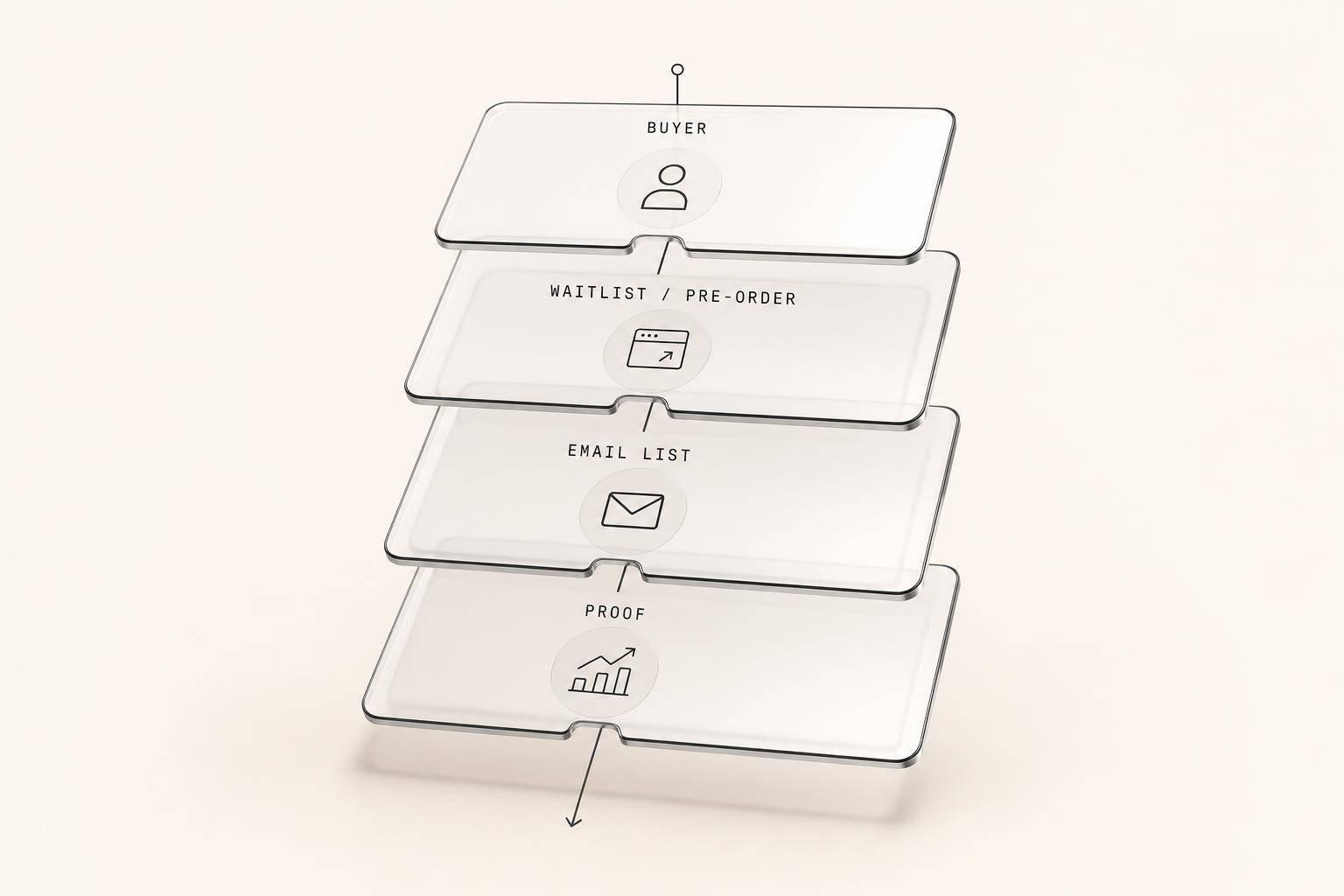
Ultimate Guide to Building a Launch-Ready Audience
If you want sales on launch day, you need more than followers. You need four things in place before you launch: the right people, proof of demand, a direct way to reach them, and trust that lowers buying doubt.
I’d boil the whole article down to this:
- Pick one clear buyer first.
- Test if they want the offer before you finish building it.
- Move attention from social platforms to email or a private group.
- Use proof, a clear message, and a working checkout to get people ready to buy.
A large audience can look good, but it often hides a hard truth: many people are not ready to spend. In many markets, email still brings in more sales than social reach alone, and pre-orders, waitlists, and beta signups tell you far more than likes ever will.
Here’s the full path at a glance:
| Step | What I focus on | What I want to see |
|---|---|---|
| Define the audience | One buyer, one problem, one result | Clear message and offer fit |
| Validate demand | Surveys, polls, interviews, waitlists, pre-orders | Signs people want it now |
| Build direct channels | Email list, landing page, private group | A way to reach people on launch day |
| Build trust | Samples, beta feedback, checkout checks, one message | Lower doubt and more buying intent |
In short: I’d start with the audience, test demand early, build my email list, and make sure people trust the offer before I ask for the sale.
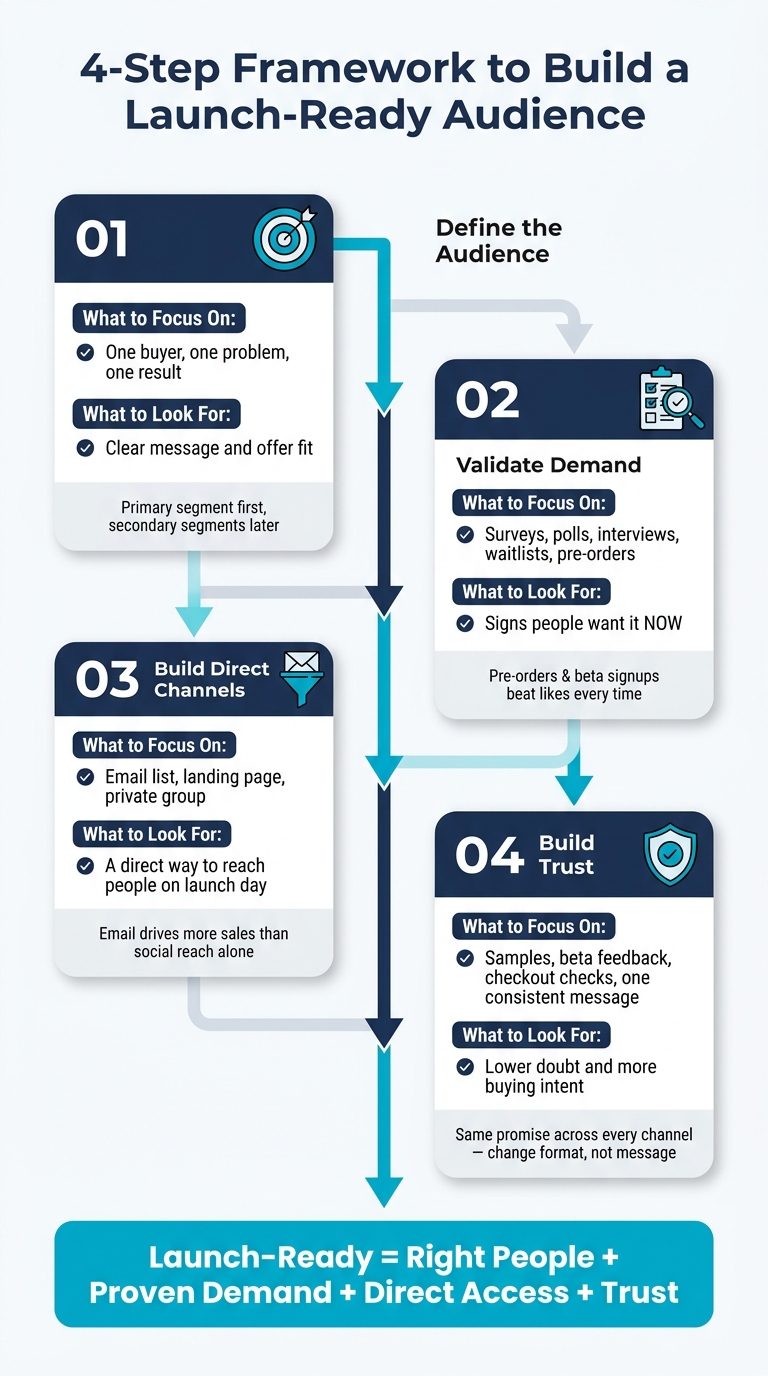
4-Step Framework to Build a Launch-Ready Audience
🚀 The Right Way to Build a Course: From Zero Audience to Launch Day 🚀
sbb-itb-e9b8513
Define Your Launch Audience
Before you build anything, get clear on who you're building for. Not a broad group like "entrepreneurs" or "content creators." You need a specific person facing a specific problem they want fixed right now.
Pinpoint the Core Problem and Desired Outcome
What painful problem do they need solved now, and what result would they gladly pay for?
A faceless content creator doesn't need more content. They need ready-to-use clips that help them stay consistent with posting. That's the gap.
When the link between problem and result is clear, your message gets easier to write. Your offer gets easier to shape. Your pricing gets easier to set.
Choose Primary and Secondary Audience Segments
Once you know the problem you solve, sort the people most likely to need it first.
- Primary segment: Faceless content creators - the group with the strongest urgency and the best fit for the product.
- Secondary segments: Aspiring entrepreneurs and digital marketers - a better fit later, once the core offer has been tested.
Match Segment Pain Points to Your Offer
After you pick the primary segment, turn that pain into the exact format and promise your product should deliver.
Match the segment's pain point to the specific result your product gives them. An aspiring entrepreneur doesn't want a random template pack. They want a structured, phase-by-phase system that takes them from idea to first product shipped.
A launch-ready audience starts with one buyer type, one urgent problem, and one clear promise. That kind of clarity makes the next step much simpler: testing whether people actually want it.
Validate Demand Before You Launch
Once you know who you're building for, the next step is simple: find out if they actually want what you're making.
Use Surveys, Polls, and Interviews to Confirm Demand
Traffic alone doesn't prove demand. What matters more are signals like surveys, signups, and pre-orders.
Ask your audience directly. A short survey, a poll in the right community, or a quick one-on-one chat can tell you more than any traffic dashboard. Focus on three things:
- The problem they're trying to solve
- What they've already tried
- Whether they'd pay to fix it
When people explain the problem in their own words, you get messaging you can use right away.
Test Intent with Waitlists, Beta Access, or Pre-Orders
Use survey responses, waitlist signups, beta requests, and pre-orders to measure demand before launch.
A waitlist form helps you capture buyer interest and intent. A pre-order or paid beta takes it a step further. It shows that someone is willing to put money down, not just click around out of curiosity. Those signals are much harder to fake, and they're far more useful than passive engagement.
Use Feedback to Adjust Your Product and Messaging
Collect responses, then do something with them.
If the same objection keeps coming up, deal with it in your offer. If one outcome gets the strongest reaction, put that front and center on your launch page. The strongest demand signals should shape your launch page, waitlist, and early-access offer.
Build Direct Audience Channels
Once you've checked that people want the offer, the next step is to build the channels you control. That way, you can reach buyers on launch day without relying on an algorithm or a platform to do you a favor.
Put owned channels first, especially email and private communities. Social media can help you get attention, but it doesn't give you the same direct line. The goal here is simple: build the paths that let you talk to people directly when it matters most.
Set Up a Simple Email Capture System
Don't overcomplicate email capture. A simple setup is enough:
- A landing page
- A signup form
- A thank-you page
Your landing page should stay focused on the offer's value and the problem it helps fix. No wandering off-topic. No clutter.
Then use the thank-you page to set expectations and show subscribers what to do next in your launch flow. That's a small touch, but it keeps momentum going.
Create Lead Magnets That Solve One Immediate Problem
Grow your list by offering one useful asset in exchange for an email address. Think of a checklist, mini-guide, or template. The format matters less than the outcome.
What matters is that it solves one specific problem your audience is already dealing with. Not five problems. Not a giant resource hub. Just one clear win.
Use Social and Community Content to Grow Owned Channels
Social content works best when it leads somewhere. Every post, short-form video, or community reply should point to a clear destination, ideally your email opt-in or early-access page.
Use social to start the conversation. Then move interested people to email or a private community. That direct path matters most on launch day.
Build Trust and Get Ready for Launch Day
You’ve built your channels and grown your list. Now comes the part that makes launch day work: trust.
Once people are on your list, your next job is to remove doubt and make buying feel safe. If someone likes your offer but still feels unsure, they usually wait. And when people wait, sales slow down fast.
Publish Proof and Pre-Launch Trust Assets
Use the objections and buying signals you collected earlier to decide what proof to publish now.
Clear proof builds confidence in the days and weeks before launch. Before launch, focus on three proof assets: sample content, beta testimonials, and a secure, working checkout page.
Share a preview of what’s inside your product, like a sample clip, ebook excerpt, or template. This gives people something they can judge right away. It turns your offer from an idea into something they can see and assess for themselves.
If you’ve run a beta, let those early users do some of the talking. Show proof of the exact outcome your audience asked for, not generic product value. That small shift matters. People want to know, Will this work for what I need?
Check the basics too:
- SSL
- Mobile performance
- Site speed
Those details may seem small, but they shape how safe your offer feels.
Align Launch Messaging Across All Channels
After proof is in place, lock in one message and use it everywhere.
Use the same promise across email, landing pages, and social posts. Mixed messages slow sales. If one page says your product saves time, another says it grows revenue, and a post talks mostly about ease of use, buyers have to piece the story together on their own. That friction can cost you.
Keep the core promise identical; change the format, not the message.
Use the same core promise across every channel so buyers hear one consistent message.
Conclusion: Your Launch-Ready Audience Checklist
A launch-ready audience knows the offer, trusts the proof, and sees one clear message everywhere. That’s the difference between launching without trust and launching to people who are already ready to buy.
FAQs
How small can my launch audience be?
Your launch audience doesn’t need to be big. It needs to be focused and active.
That’s the key idea here: success depends less on audience size and more on the quality of the community around you.
With myAtlasLab’s Launch OS, even a small audience can gain traction when you give them high-value, rebrandable digital assets that fit what they need. When people are deeply engaged and the content gives them something they can act on, those early supporters can help turn a small launch into steady growth.
What’s the best way to validate demand fast?
The fastest way to validate demand is to test product concepts before a full launch. myAtlasLab’s Launch OS and AI tools can help you shape and refine ideas based on market interest.
You can also use its ready-to-use digital assets to launch rebrandable templates and guides fast, track audience engagement, and fine-tune your offers before putting in more time or money.
When should I use a waitlist vs. pre-orders?
Use a waitlist in the early research phase to measure interest without asking people to spend money yet. It gives you a way to build a community and collect feedback before the product is fully defined.
Switch to pre-orders later, once development is farther along and you have a firm launch date. That helps you bring in revenue and validate demand through actual purchases.